
01
Data collection
Capture observations using virtual or supported physical sensors, label specimens and develop a scientific dataset.
Observe · Capture · LabelInnovation / PHL Classroom
Bring environmental science and applied data intelligence into the classroom. Investigate real-world questions, collect evidence, develop algorithms and learn to interpret the results together.
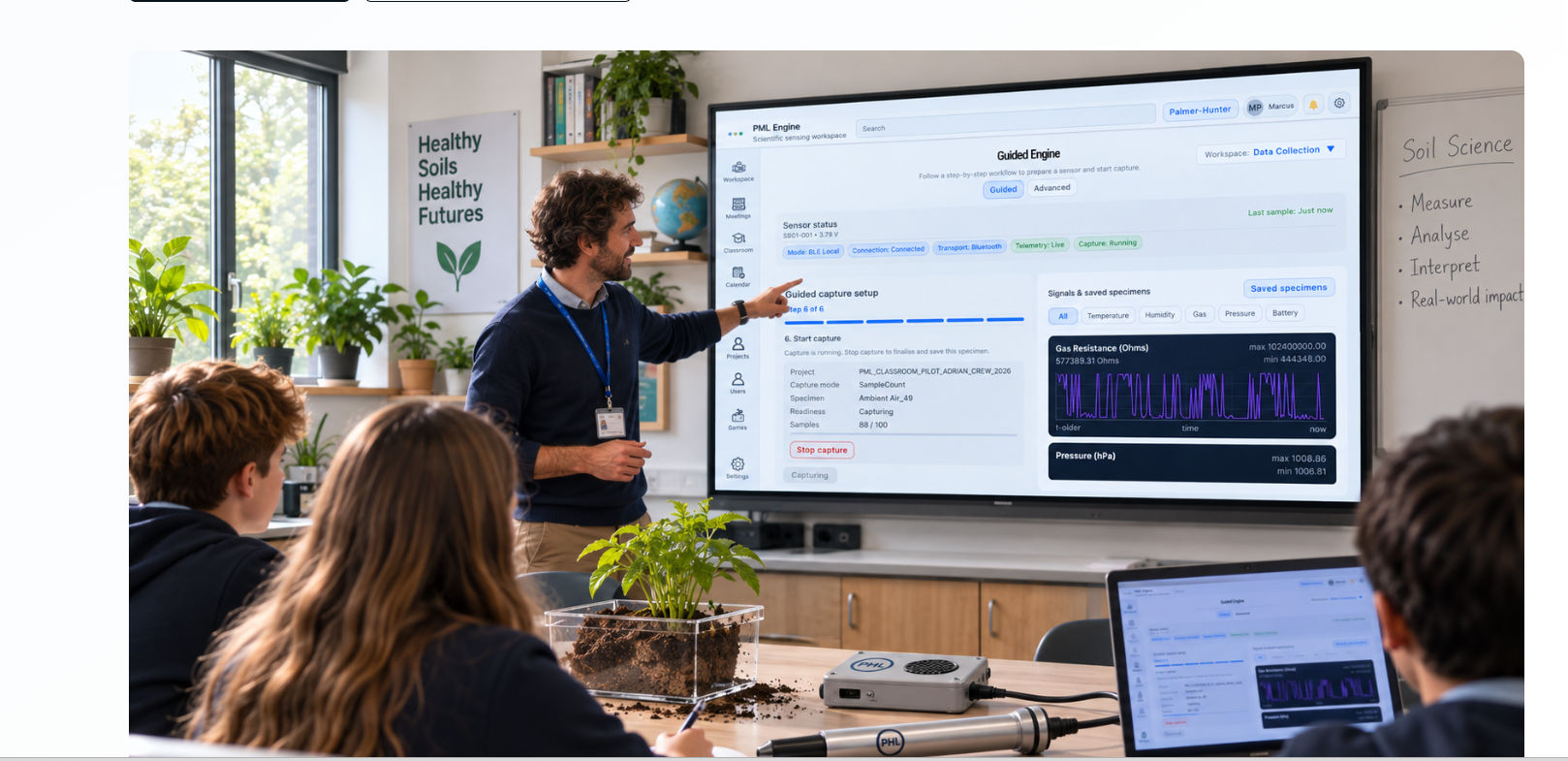
The scientific classroom process
PHL Classroom connects scientific investigation with data-driven learning, from the first observation to testing an algorithm.
Capture observations using virtual or supported physical sensors, label specimens and develop a scientific dataset.
Observe · Capture · LabelOrganise labelled evidence, configure training and develop classification or regression models.
Configure · Train · EvaluateTest trained models against new observations, interpret their outputs and consider uncertainty.
Predict · Interpret · RefineInside the Classroom Engine
Explore genuine Classroom Engine screens used for collecting observations, developing algorithms and organising learning.
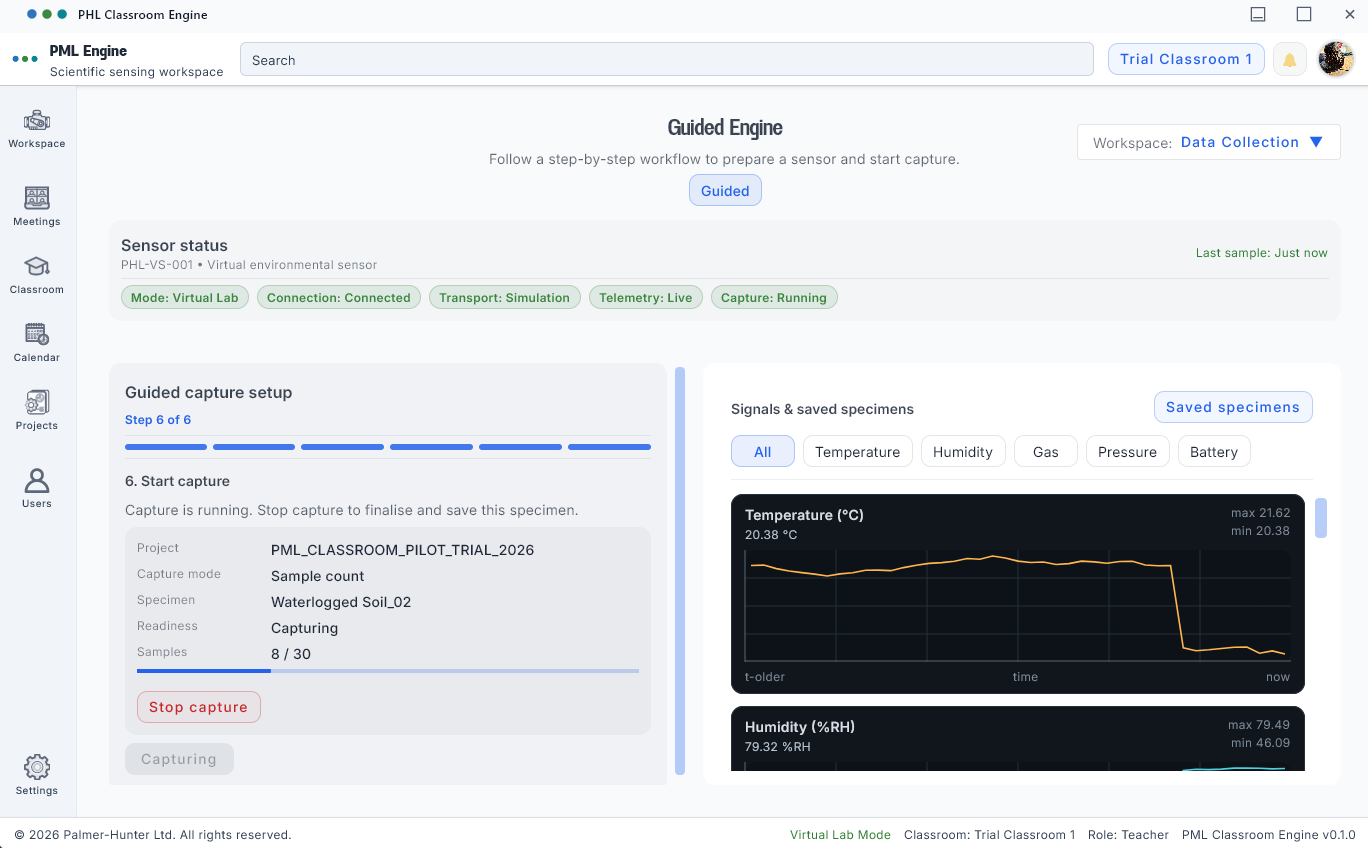
Observe signals and collect labelled specimen data.
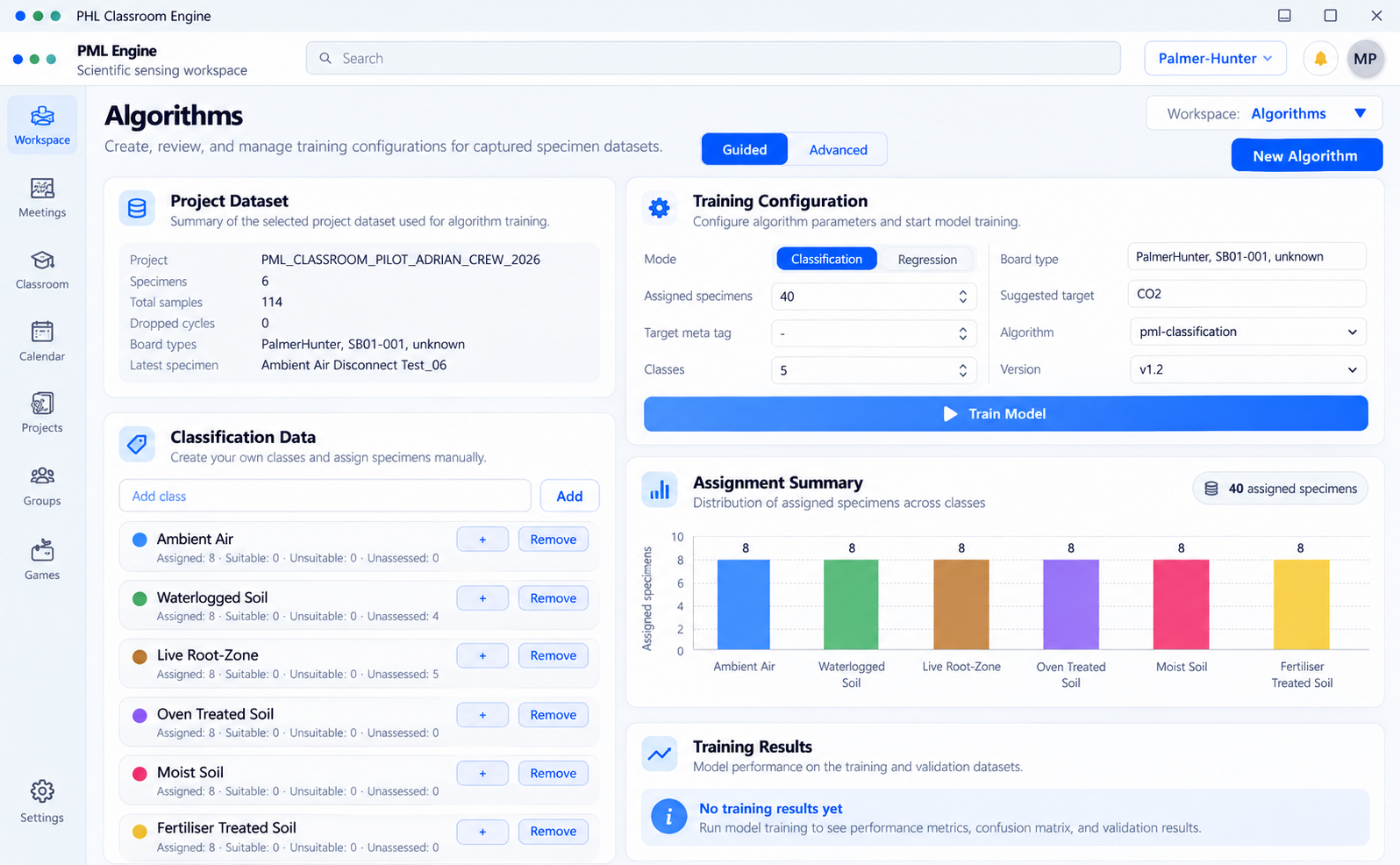
Build models from scientific observations.
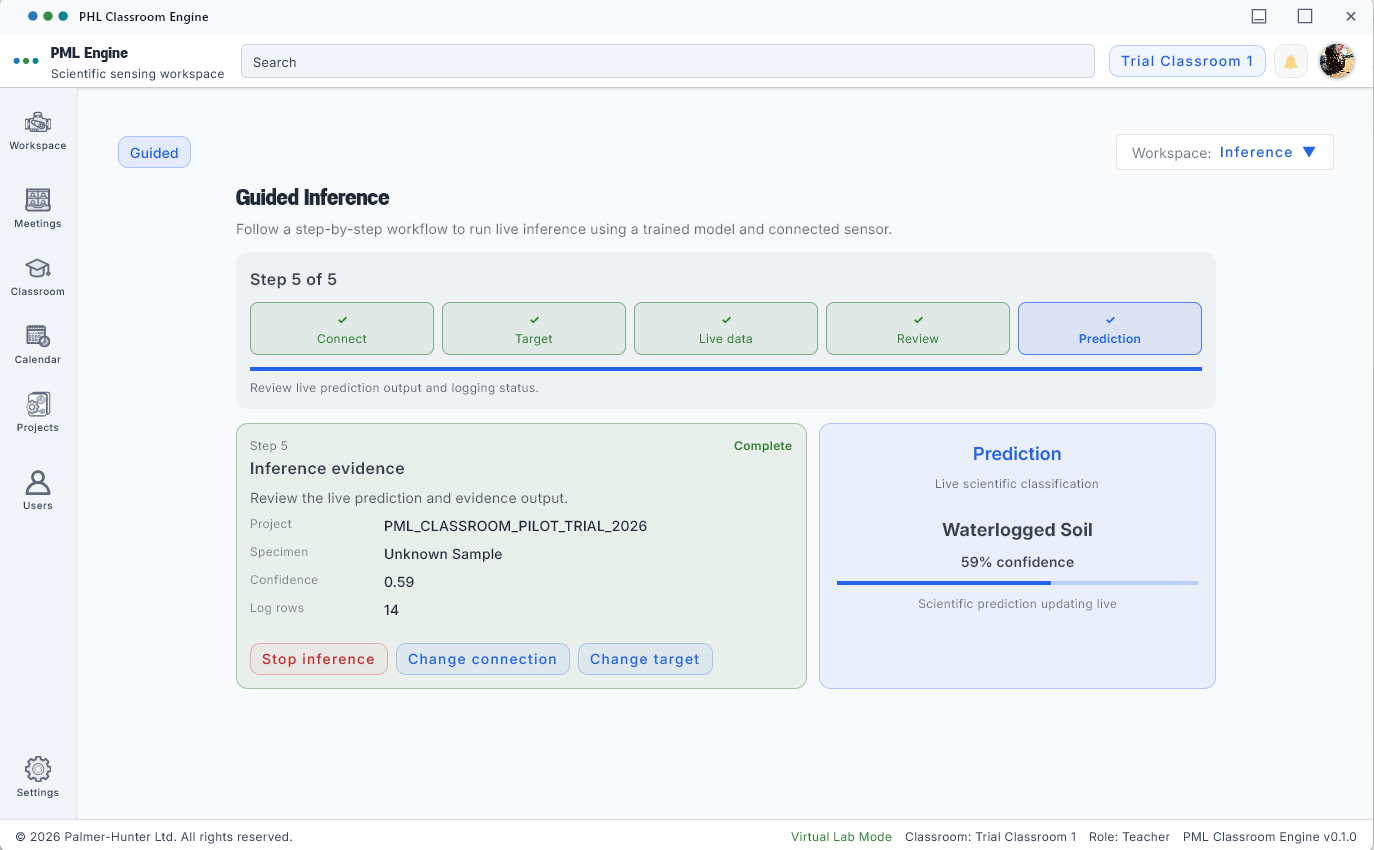
Apply trained models to new observations and explore predictions, confidence and scientific uncertainty.
Experience PHL Classroom using virtual sensors. Collect simulated observations, label specimens, develop algorithms and explore inference before investing in physical sensing equipment.
Explore scientific processes used with supported sensors.
Investigate changing environmental sensor data.
Begin with the available Education Trial capabilities.
Trial capabilities and specimen limits apply. Simulated measurements are not physical observations.
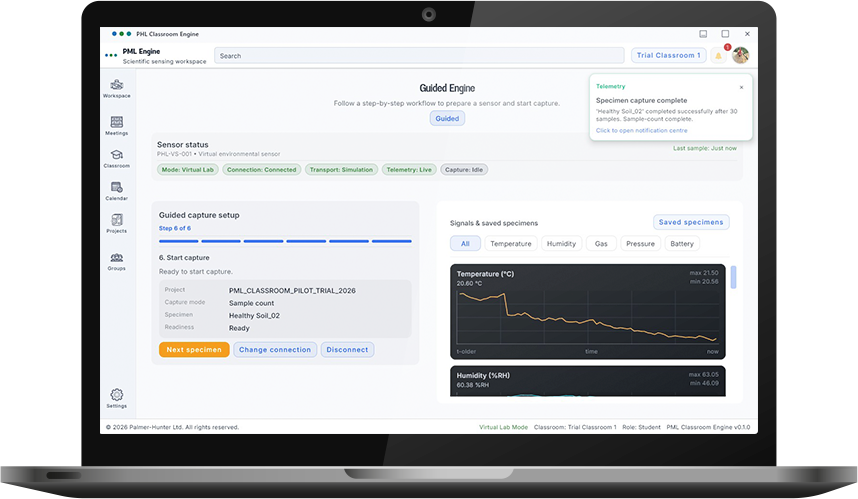
PHL Classroom Engine Virtual Lab — simulated environmental sensor observations.
Explore supported simulated environmental conditions.
Observe sensor signals through the capture workflow.
Organise observations using scientific specimen definitions.
Explore training and inference where entitled.
Define an investigation.
Select a simulated environment.
Capture simulated readings.
Build labelled observations.
Train models where available.
Evaluate predictions and evidence.
Beyond the experiment
Bring educators and students together through organised groups, scientific communication, structured activities and connected learning experiences.
Create digital classrooms, organise student groups and bring collaborative scientific investigations into one connected learning environment.
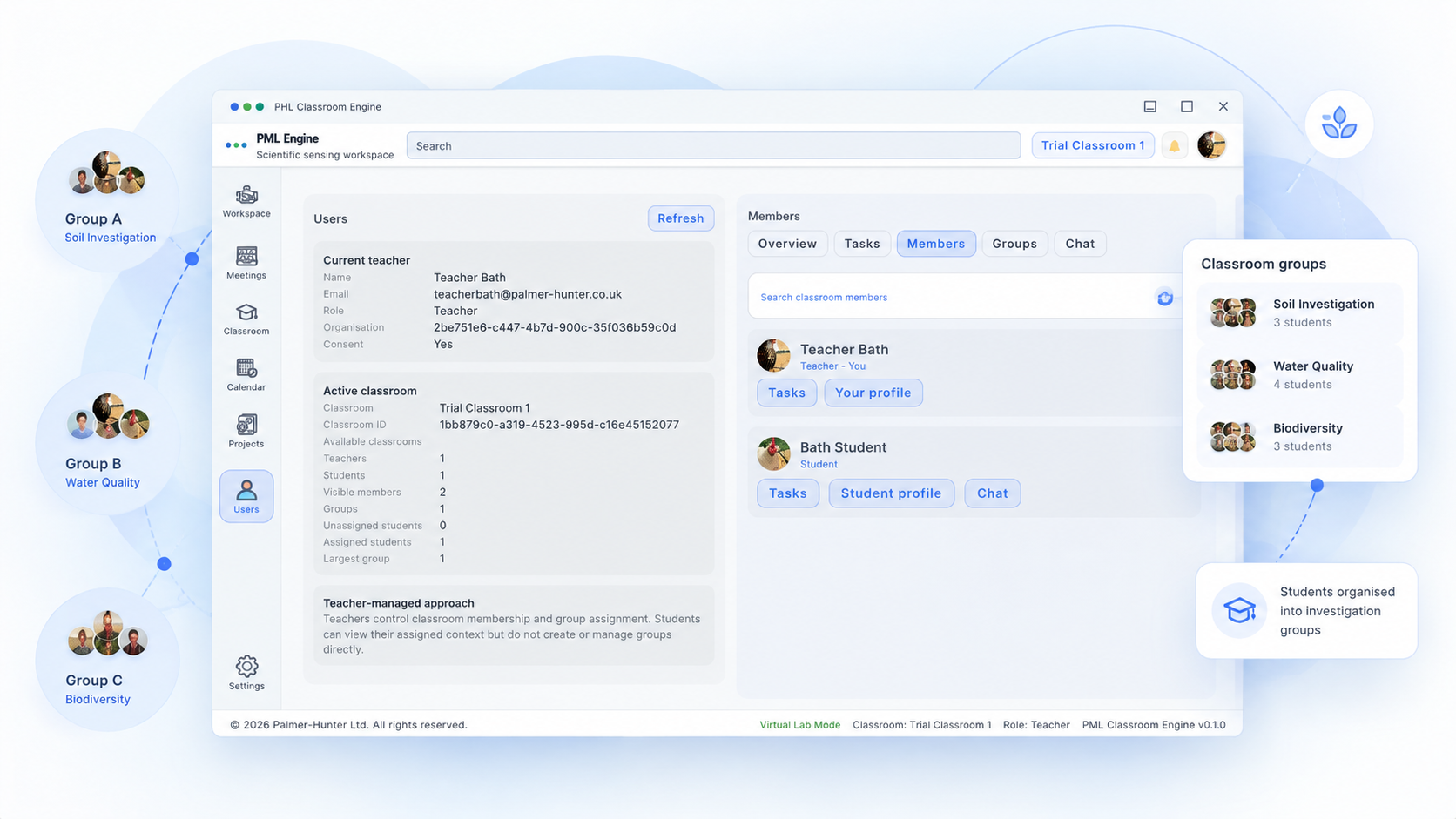
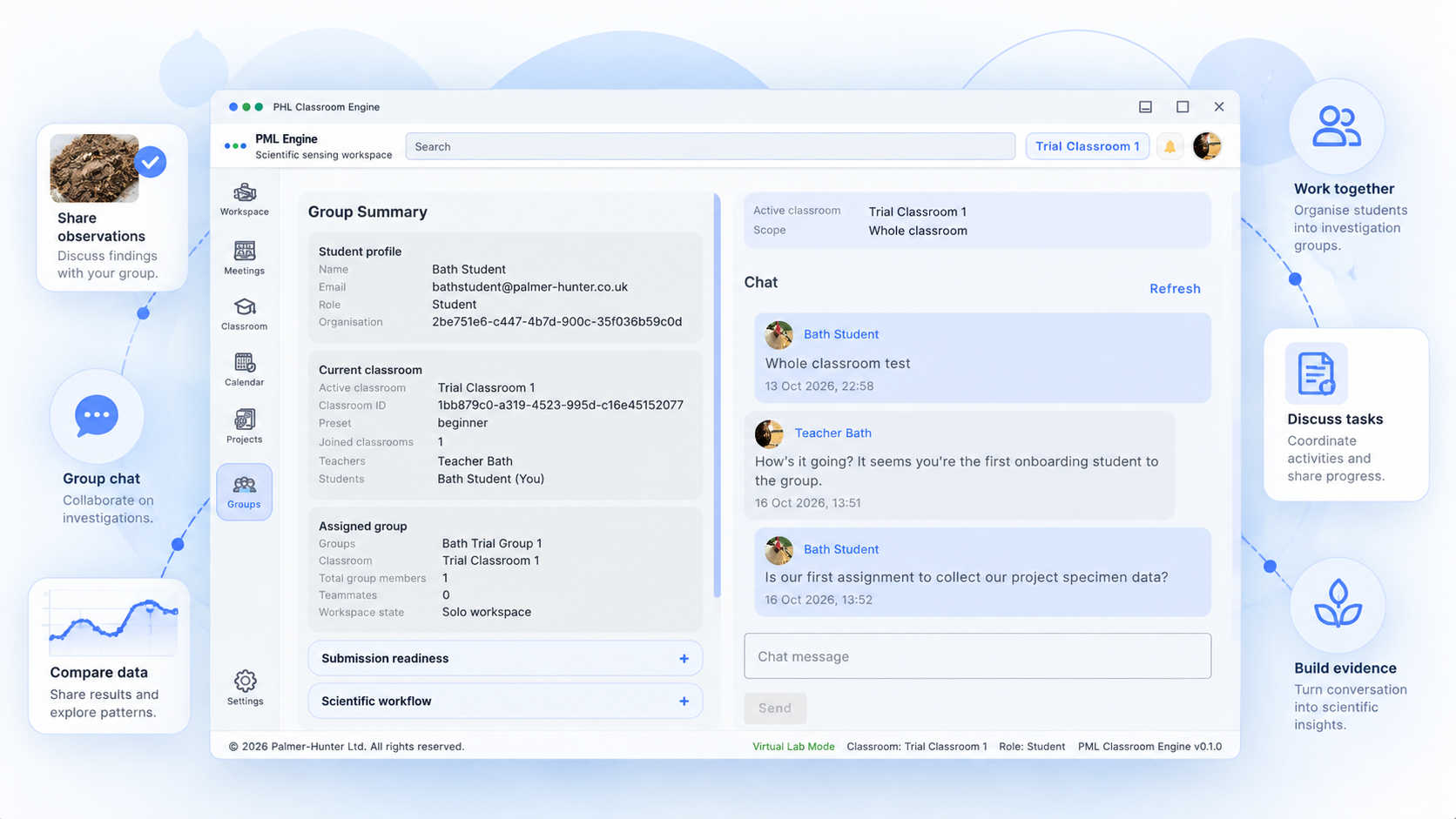
Support classroom-wide discussions and group conversations so educators and students can exchange ideas, discuss observations and collaborate around their investigations.
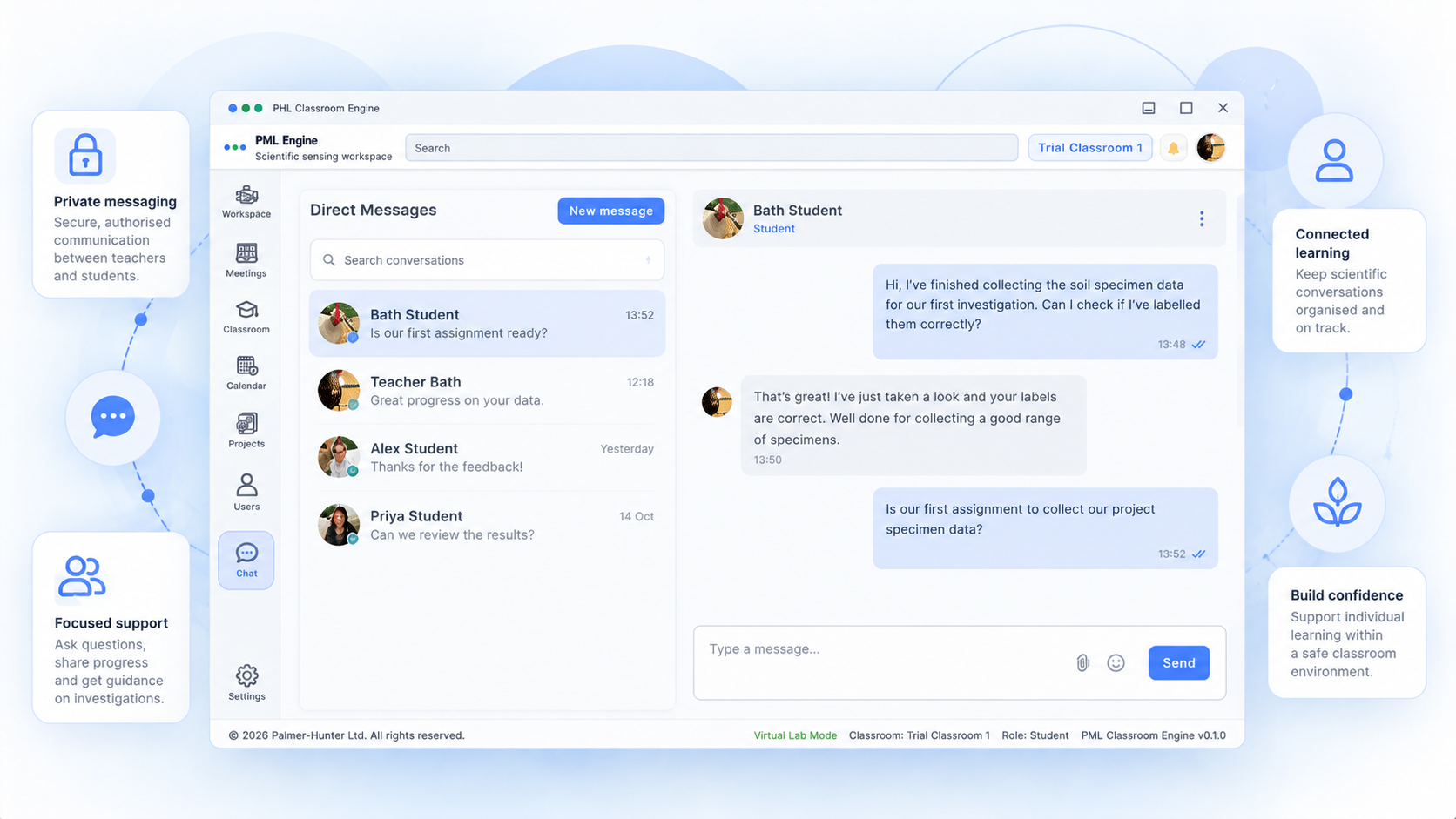
Use authorised direct messaging within the Classroom environment, with access governed by user roles, membership and applicable permissions.
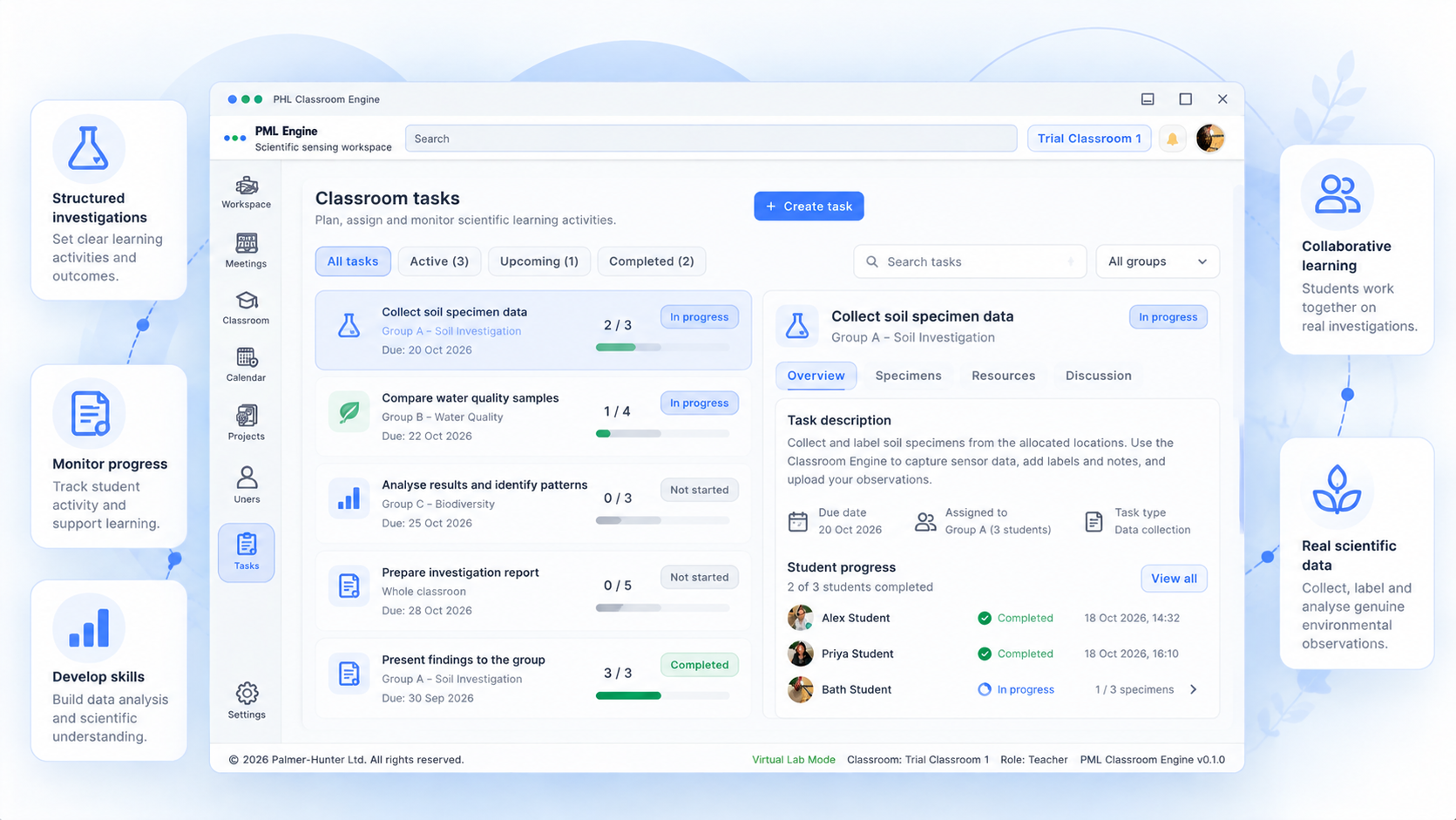
Connect scientific learning with structured tasks, assistance and monitoring tools that support the organisation of classroom investigations.
Explore integrated meeting capabilities for eligible licensed education environments, bringing communication and coordinated learning into the wider Classroom experience.
Meetings are subject to product entitlement and are not included in the Education Trial.
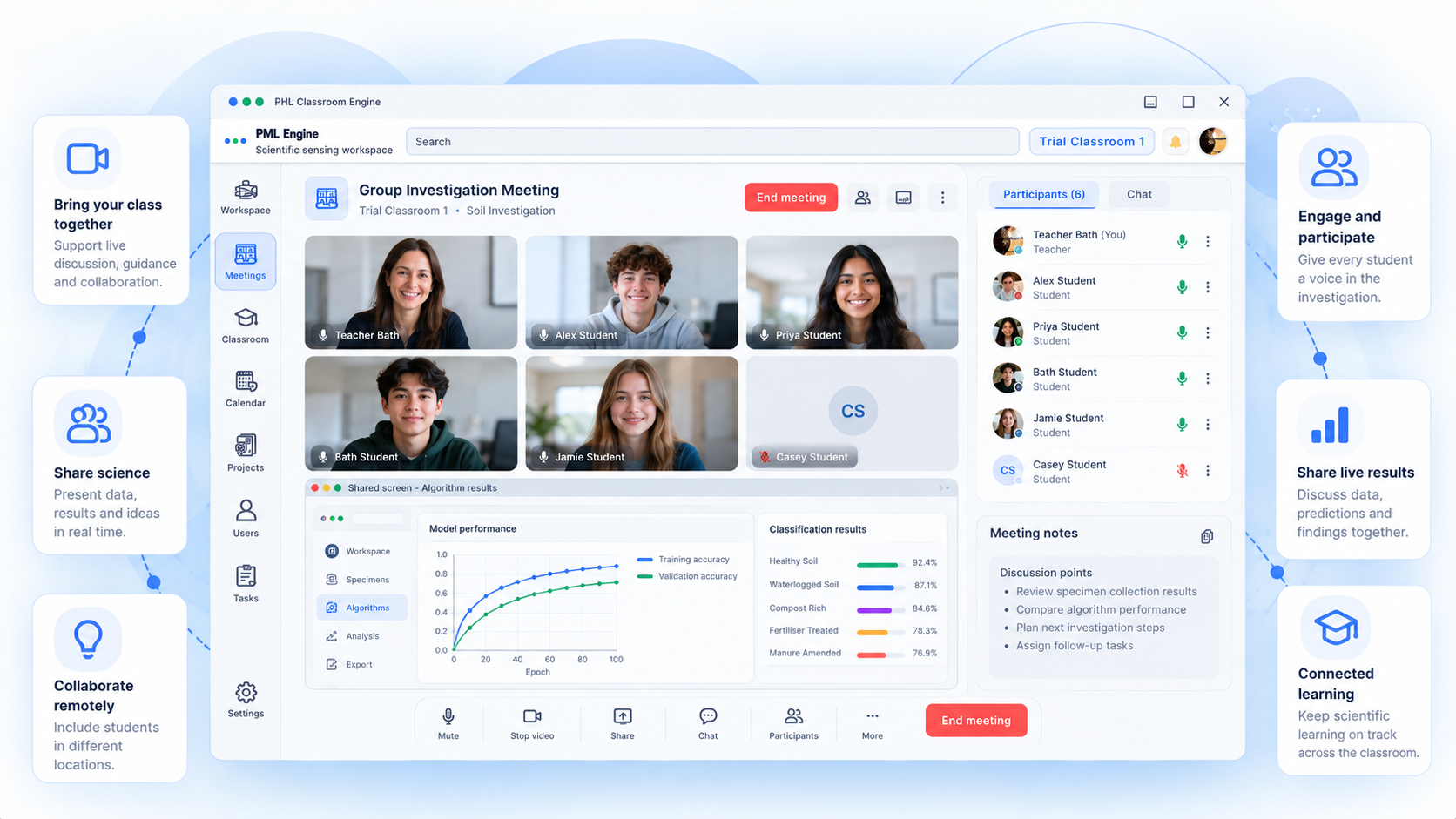
Feature availability depends on the institution's package, entitlement and applicable permissions.
Intelligence throughout the investigation
Explore how PHL Classroom supports scientific projects, specimen investigations, collection assessment and evidence-based reasoning. Assistance supports student judgement rather than replacing it.
Use structured project evidence and readiness guidance to explore investigation goals, identify gaps and develop meaningful scientific reports.
Bring specimen information and collected observations into the wider project context. Explore evidence completeness and questions that may warrant further investigation.
Assess capture information and measurement-quality indicators, including completeness and stability. Receive an assessment status, confidence, reasons and recommendations to inform whether observations should be used, reviewed or collected again.
Explore interpretation readiness, algorithm and inference evidence, limitations and possible next steps through structured scientific reporting assistance.
AI assistance is subject to applicable product entitlements and permissions. Assessments provide guidance, not independent scientific validation.
One connected learning environment
PHL Classroom connects teacher-led activities, student investigations, environmental observations and data analysis. Scientific evidence becomes something students can question, explore and use to develop their own understanding.
Create digital classrooms, organise student groups, define learning activities and guide investigations with structured tasks and outcomes.
Explore specimens, collect labelled observations, investigate patterns, test predictions and communicate findings within the learning experience.
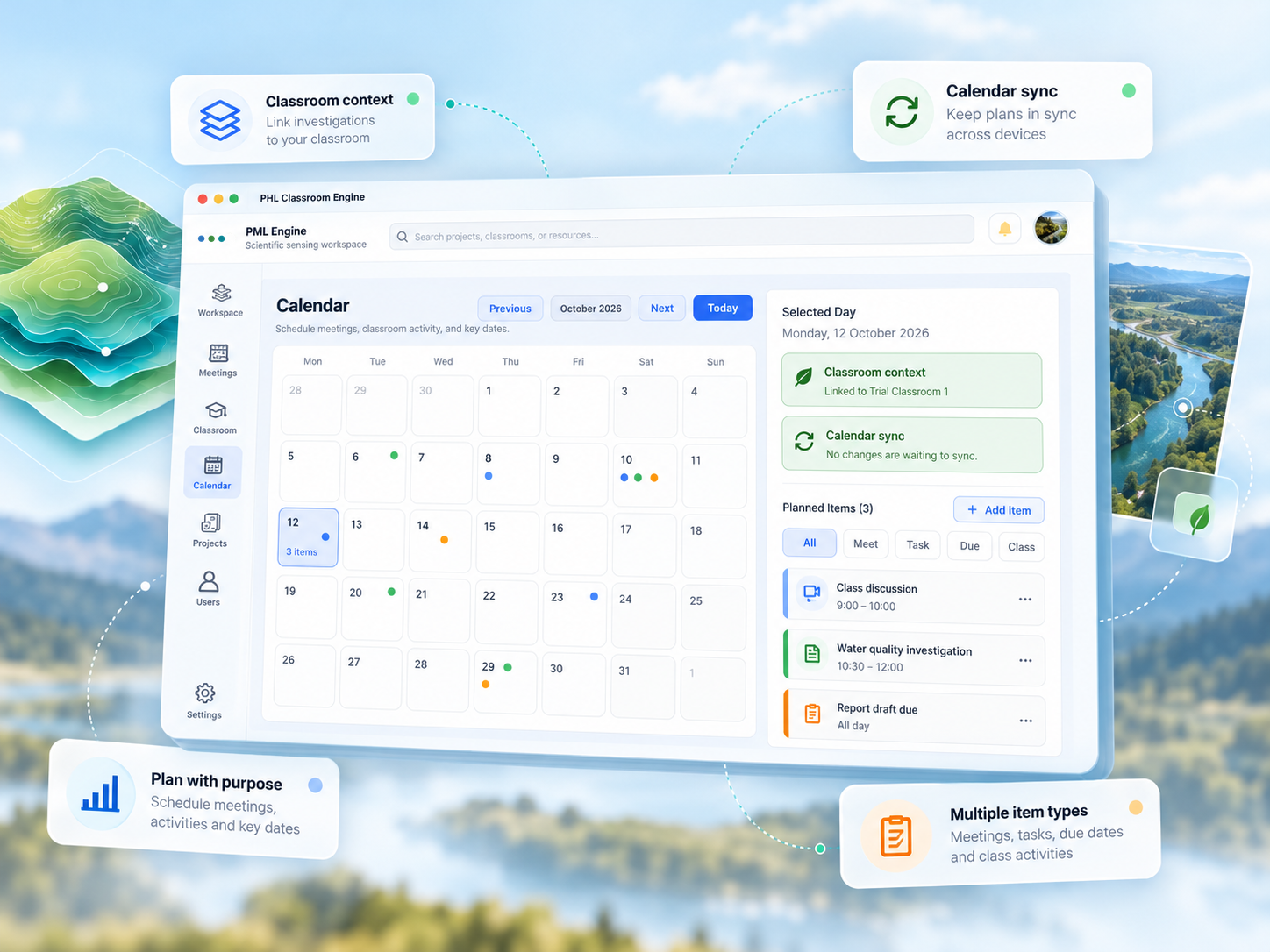
For educators
Support structured scientific learning through classroom scheduling, planned activities and coordinated investigations.
The scientific learning journey
A connected process that brings experimental science and computational thinking into the same learning journey.
Frame a scientific question and plan an investigation.
Gather and label observations from specimens and environments.
Use collected evidence to train and evaluate models.
Apply algorithms to new observations and examine inference results.
Examine patterns, accuracy and uncertainty in the evidence.
Discuss results, share findings and refine scientific understanding.
Virtual and physical investigations
The virtual learning experience allows students to work with simulated sensor observations and explore data-driven investigation without first requiring physical hardware. Supported physical sensing extends the experience into practical specimen and environmental measurements.
Explore simulated observations, specimen labelling, algorithm development and inference within the capabilities available to the account.
Collect supported measurements from physical sensors, investigate specimens and compare observations across experimental conditions.
Available capabilities, usage limits and hardware access depend on the selected package or trial entitlement.
Learning across environments
Investigations can explore soil, controlled environments, specimen headspace and other supported experimental contexts. Students learn to distinguish observations from conclusions and to evaluate what their data can and cannot demonstrate.
Explore changing conditions and compare experimental samples.
Understand labelled datasets, visualisations and evidence quality.
Train, test and critically evaluate predictive algorithms.
For schools, colleges and universities
PHL Classroom brings experimental investigation and computational analysis into a coherent educational workflow. Educators can structure activities while students engage with evidence, collaboration and scientific reasoning.
Begin your Classroom journey
Explore the available Classroom packages and trial options through the Palmer-Hunter Labs platform.